FINWELL

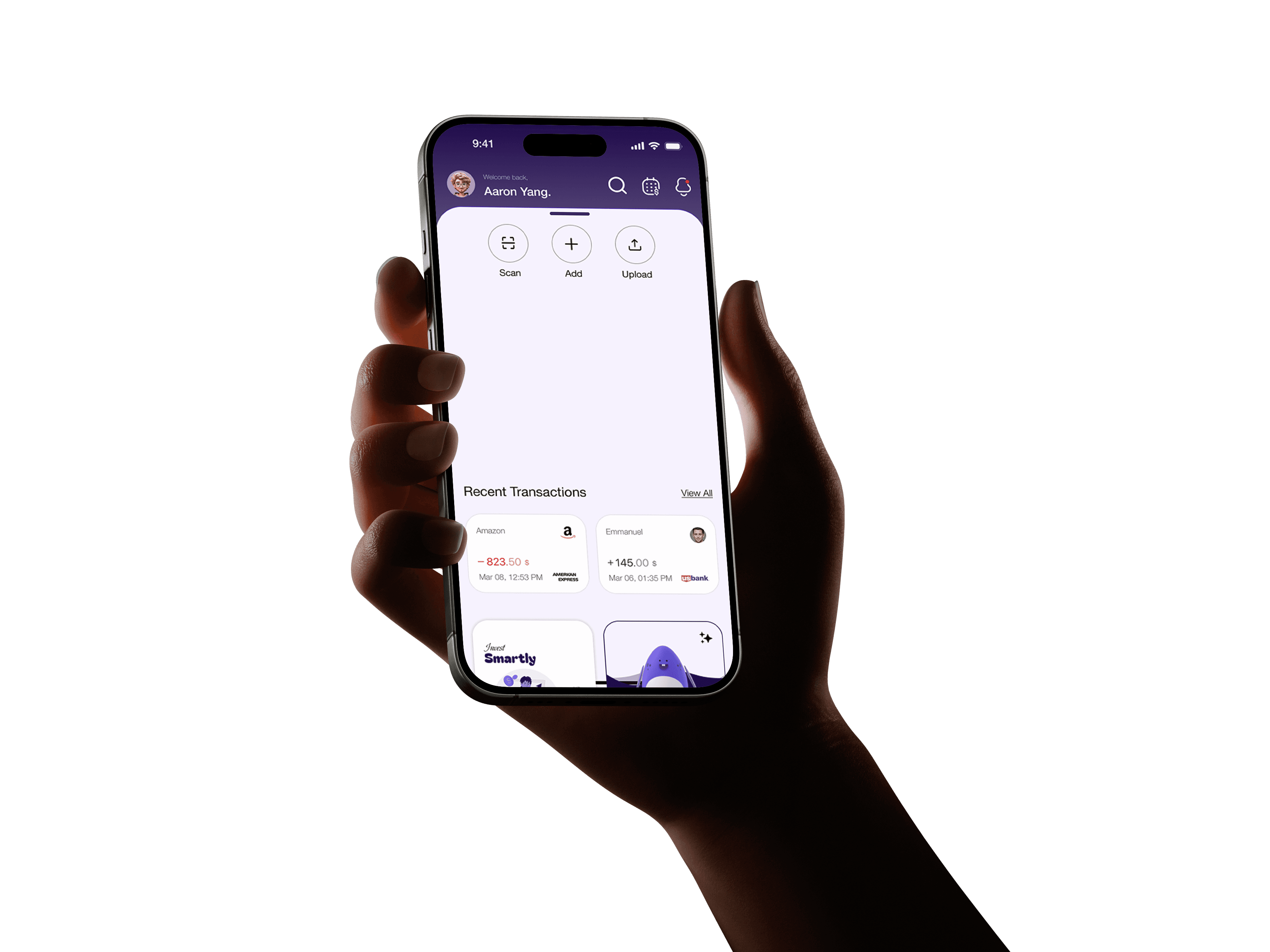

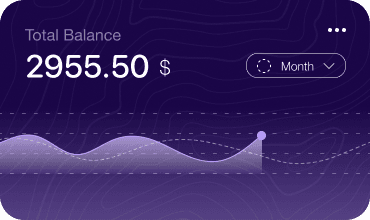

Cheapest match found
$
79.99
Budget Intelligence
Delay Purchase
24 hr
FinWell
Lead Product Designer

Concept
Product Design
Behavioral Finance
AI Decision Making
UX Research
Designing an app that helps people spend
smarter.
FinWell is a behavioral finance platform that guides spending decisions before they happen — using real-time nudges, flexible budgeting, and AI-powered purchase intelligence.
TIMELINE
TEAM
TOOLS
Jan - March
2025
Me, 2 UX Researchers,
1 Graphic Designer
Figma, FigJam, Miro
MY ROLE
UX Researcher &
Product Designer
MY ROLE & CONTRIBUTIONS
UX Researcher & Product Designer
Led 8 user interviews and behavioral research
Defined product strategy and design principles
Designed Budget Intelligence — the core AI feature
Built high-fidelity flows from concept to prototype
PROBLEM & OPPORTUNITY
Most apps show you what happened.
None help you decide.
Young adults overspend not because they lack data — but because existing tools show consequences after the fact, never before. The problem is behavioral, not informational.
Purchases happen in seconds, driven by stress, boredom, and FOMO — with no time for financial reflection before checkout.
Impulse decisions dominate
Tracking happens too late
Users only see overspending in their monthly bank statement — by then, the damage is done and behavior can't be changed.
Budgeting feels restrictive
Strict category limits cause abandonment. When users "fail" a category, they quit the tool entirely — the worst possible outcome.
"Where did my money go?"
"Should I spend this money
right now?"
WHAT USERS ACTUALLY NEED
❌ WHAT EXISTING APPS ANSWER
How might we help users make informed purchase decisions in real time,
without increasing cognitive load or disrupting their natural behavior?
RESEARCH & INSIGHTS
8 Interviews. CREATE framework.
One clear direction.
Semi-structured interviews with students and young professionals aged 18–35, followed by CREATE behavioral framework analysis across all 4 personas to decode exactly where financial habits break down.
8 participants
User Interviews
60-min semi-structured sessions exploring spending triggers, emotional drivers, and prior tool usage with target users aged 18–35.
Interview Protocol
User Personas
Interview Insights
Behavioral Mapping
Mapped trigger → behavior → consequence loops across 6 journey stages per persona to identify precise intervention points.
8 behavior maps
Applied behavioral design analysis across all 6 dimensions per persona. Revealed that users fail at Cue, Timing, and Experience — not knowledge or ability.
CREATE Framework
4 analyses
Cue
Reaction
Evaluation
Ability
Timing
Experience
Market Research
Evaluated Mint, YNAB, Acorns, and Monarch to map the gap in behavioral decision support. Every tool tracked spending — none intervened before it happened.
4 products
MINT
MONARCH
ACORNS
YNAB
"When I'm stressed I buy something small, it feels good for a moment but I regret it later."
Purchases driven by emotional triggers, not need. Decisions happen in seconds with no room for reflection.
IMPULSE SPENDING
Delay Purchase (24-hour hold)
Led to:
"

Suresh | 25 M
THE IMPULSIVE SPENDER
"I only realize I overspent at the end of the month, by then there's nothing I can do."
Awareness arrives weeks too late to change behavior. Financial insight must appear before spending happens.
DELAYED AWARENESS
Budget Impact Visualization
Led to:
"

Siddarth | 19 M
THE FINANCIAL TRACKER
"I've tried three budgeting apps. Too much manual entry, I always quit after a week."
Rigid category systems and manual entry are the #1 abandonment driver. Automation is essential.
BUDGETING FATIGUE
Flexible Budget Cap + Auto-Savings
Led to:
"

Andrea | 28 F
THE CAUTIOUS BUDGETER
"I want to save but I always end up spending it before I get the chance."
Kat had the motivation but not the system. Every intention to save was overridden by spending that felt urgent in the moment.
SAVINGS GUILT
Auto-Savings Transfer + Financial Goals
Led to:
"

Kat | 34 F
THE COMMITTED SAVER
DESIGN SOLUTION
Three pillars. Every feature traces
back to one of these.
From research, four personas were identified — each with a precise target action. Features were designed to address each persona's specific behavioral failure, not a generic wishlist.
Intervene before impulse purchases happen — not after. The 24-hour hold creates the reflection moment that was missing.
Prevent
Guide
Make financial consequences visible in real time. Budget impact at point of purchase changes decisions more than any monthly report.
Automate
Remove the willpower requirement. Automated savings, passive tracking, and smart defaults beat any system that relies on discipline.
#1
SIDDARTH
Point your camera at any bill. Expenses log and categorize themselves — no manual entry, no abandonment.
Scan & auto-categorize
Adjust any category at any time. Overrunning a limit is a nudge — not a failure that makes you quit.
Edit Budget Limits
#2
ANDREA
#3
KAT
Set a goal, enable auto-transfer on payday. Saving happens before emotional spending can deplete it.
Create a Savings Plan
Connect all cards. Edit any transaction's category. When the data is trustworthy, people actually use it.
Manage cards & transactions
#4
SIDDARTH
#5
KAT
ANDREA
SIDDARTH
SURESH
BUDGET INTELLIGENCE
FinWell — a financial
decision partner.
Search any product. See the best price across every retailer. Know your budget impact before spending a single dollar.
01
SEARCH
Search any product by name, voice, or scan the barcode in-store.
02
COMPARE
AI finds it across every major retailer. Results ranked by budget fit — not just lowest price.
03
EVALUATE
See exactly how this purchase affects your budget — before, after, and by category.
04
DECIDE
Delay 24 hours, find a cheaper alternative, or proceed with complete financial awareness.

Budget Intelligence AI
Finds the best deal and shows budget impact—before you spend.
Budget Impact Visualization
Before/after budget bars make costs instantly clear.
Behavioral
Nudges
Four choices—delay, alternatives, adjust, or proceed—encourage reflection without restricting users.
IMPACT & REFLECTION
Measured against behavior change,
not engagement metrics.
Success was defined in the project brief — not as DAU or time-in-app, but as real changes in financial behavior over six months.
%
Target reduction in impulse purchases over 6 months
.
/7
Average task usability score across all core flows
%
Target increase in consistent budgeting practices
"I've used Mint and YNAB and always quit after a week. This is the first time I felt like an app was actually helping me make a decision — not just judging me afterward."
— Participant, User Testing · Graduate Student, 26
"
KEY LEARNINGS
Three things that reshaped
how I design.
Behavioral insight over financial data
Users already have financial data. What they lack is guidance at the exact moment decisions are being made. Design for the decision — not the dashboard.
01
Automation beats motivation
Systems that eliminate effort are adopted long-term. Systems that rely on user discipline fail within weeks. Remove the willpower requirement entirely.
02
Research wins every room
When the team pushed for the widget marketplace, returning to direct user quotes resolved the debate immediately. Data from real users beats any design opinion.
03
FUTURE OPPORTUNITIES
If FinWell were developed further
— here's what's next.
Test 12, 24, and 48-hour pause intervals to find the optimal intervention window that maximizes cancellation rate without causing frustration.
A/B test purchase delay timing
01
Connect accounts through Plaid to enable fully passive transaction tracking — eliminating all manual entry and testing whether it drives significant retention improvement.
Bank integration via Plaid API
02
Use spending history to forecast future budget risks and suggest proactive adjustments — shifting FinWell from reactive to genuinely predictive financial wellness.
Predictive financial insights
03
FINAL TAKEAWAY
From tracking expenses
→ to shaping decisions.
FinWell proves that behavioral design and AI can transform financial apps into intelligent decision support systems, helping people build healthier habits one purchase at a time.
AI Anomaly Detection
in Spreadsheets
WORKIVA
Belonging
by Design
GYMLINK+
Coming Soon
Coming Soon